KnowledgeUpdated: July 8, 2026
Virtual Staging or Home Staging: What Pays Off for Marketing?
Virtual staging furnishes empty rooms digitally on the computer, while classic home staging sets them up with real furniture on site. Both aim to make living tangible for prospective buyers. Virtual staging is usually faster and location-independent, home staging works during on-site viewings. Which option pays off depends on the property, the timeline, and the marketing channel.
Contents
As a 3D artist I create virtual staging for agents and developers. Since the question often comes up whether classic home staging might be the better choice, I compare both approaches honestly here, with their strengths and limits from practice.
What is virtual staging?
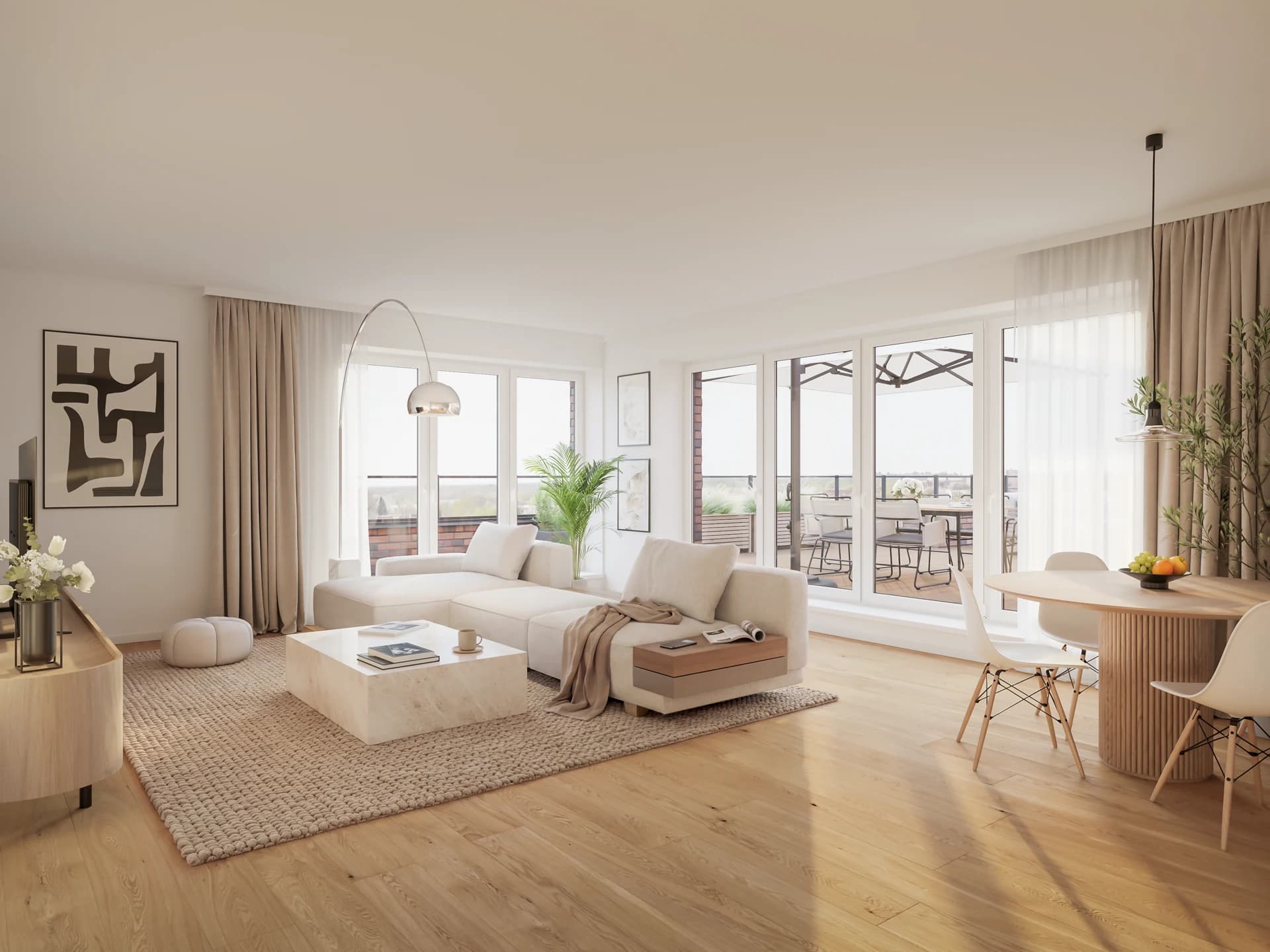
In virtual staging, an empty or unfinished room is furnished digitally. The basis is a photo of the empty room or, for a new build without finished rooms, a 3D model. Furniture, textiles, light, and decoration are created on the computer and placed into the image. The result is an image that shows the room lived-in and inviting, without a single real piece of furniture being moved.
What is classic home staging?
Home staging sets up a room with real furniture and accessories on site. A stager brings furniture, textiles, and decor into the home, arranges everything to support the sale, and then has it photographed. For occupied properties, decluttering and neutralizing are often part of it. The setup stays in place for viewings, so prospects experience the rooms furnished.
The differences at a glance
| Criterion | Virtual staging | Home staging |
|---|---|---|
| Effort on site | None, everything on the computer | Furniture transport, setup and removal |
| Speed | Fast, image work only | Depends on logistics and scheduling |
| Style variants | Several styles possible without extra logistics | One setup per appointment |
| New build without finished rooms | Possible, from the 3D model | Not possible |
| Effect during on-site viewing | Only in the image, the room stays physically empty | Prospects experience the furnishing in person |
When virtual staging pays off
- For new-build projects whose rooms do not yet exist and are visualized from the plan.
- For empty or unfinished properties that need to go online quickly.
- When several furnishing styles are to be tested or different target groups addressed.
- For properties located farther away, where an on-site setup would be cumbersome.
When classic home staging is the better choice
- For high-priced properties with many on-site viewings, where the atmosphere needs to convince in person.
- When prospects should enter the rooms furnished and feel at home right away.
- For occupied or cluttered properties that are decluttered and rearranged.
Can both approaches be combined?
Yes, and in practice they complement each other well. For online marketing and the exposé, virtual staging delivers meaningful images quickly, even before an apartment is finished. For the decisive on-site viewing, classic home staging can provide the physical impression. Anyone starting online early and offering viewings later covers both phases with the combination.
Does virtual staging need to be labeled?
I label digitally furnished images as a visualization. That keeps it clear in the exposé what was really photographed and what was added on the computer. It is fair to prospective buyers and prevents disappointment at the viewing. It is also important not to distort the floor plan: virtual staging should furnish a room, not make it look larger or differently shaped than it is.
In short: virtual staging is the fast, flexible route for online and exposé marketing, especially for new builds and empty properties. Classic home staging pays off when the real on-site impression is decisive. If you are having visualizations made anyway, virtual staging fits seamlessly with interior visualization. How a rendering is created in general is explained in the fundamentals article What are architectural visualizations?.
Planning a project?
Send me your key details and you will receive a concrete, free quote within 48 hours.
Request a free quote