KnowledgeUpdated: July 18, 2026
Day and Night Visualization: When Both Variants Pay Off
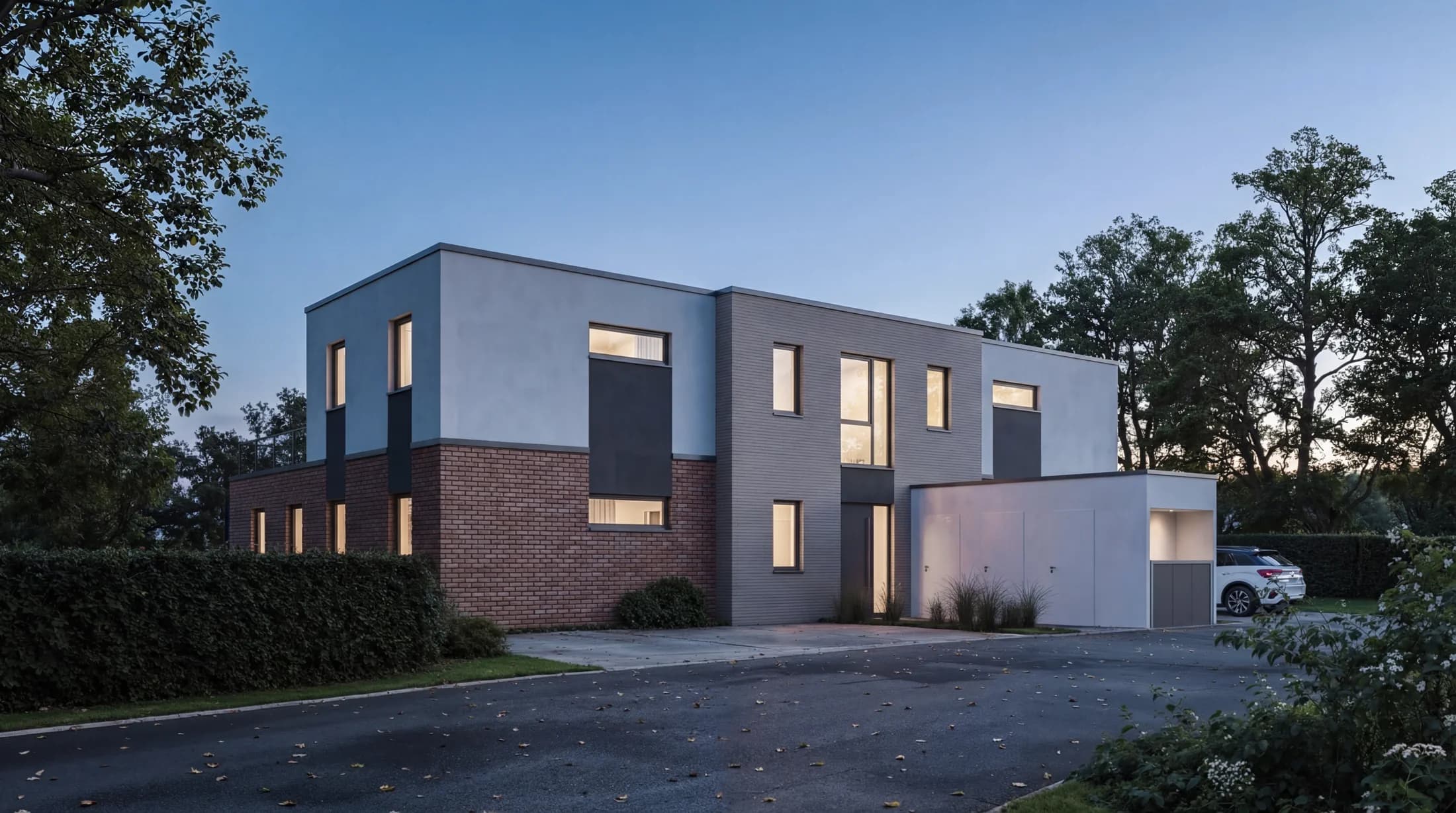
A night visualization shows a building project in evening or night mood: lit windows, exterior lighting, a dark sky. It is created from the same 3D model as the daytime view, but rebuilt and rendered with its own lighting setup. In marketing, it adds what facts alone cannot convey: atmosphere.
Contents
What the daytime view does
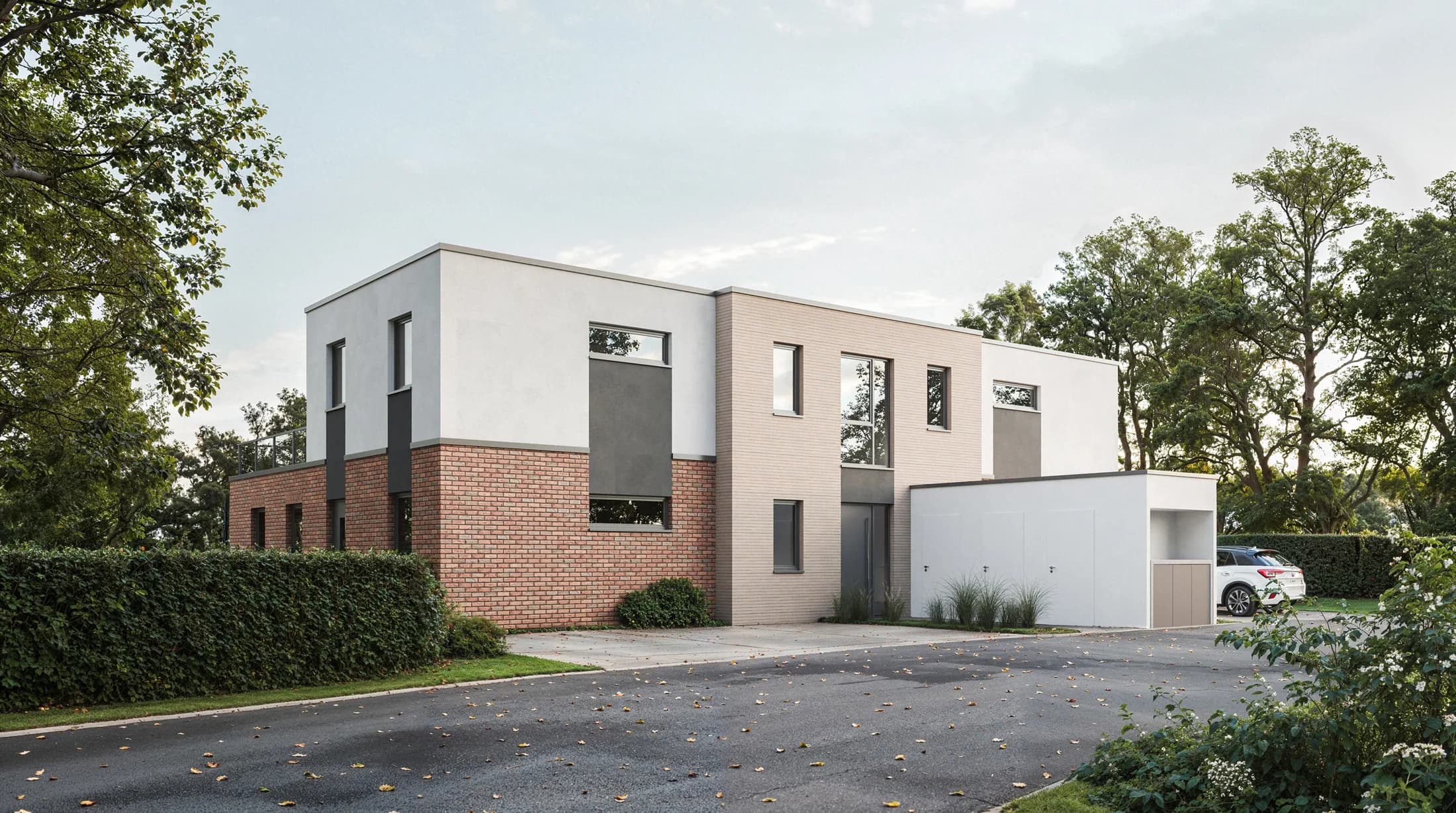
The daytime view is the workhorse of every project marketing campaign, and rightly so. In daylight, prospects judge what they will actually buy:
- facade materials and colours as they appear in reality
- how the building sits on its plot, outdoor areas, planting
- proportions and details without dramatising light effects
That is why, in my project practice, the daytime view always comes first. It is the binding, honest representation of the project and the reference for all material decisions during the approval process.
What a night visualization makes visible
At night, the job of the image shifts. It is no longer about checking materials, it is about effect:
- The building feels inhabited. Warmly lit windows tell the story that life happens behind the facade. That is exactly the mental image a buyer should develop.
- The lighting concept becomes a selling point. Entrances, path lights, accented facade surfaces: what stays invisible in the daytime image carries the whole picture at night.
- Commercial space gains presence. A lit ground floor with recognisable use anchors the project in the streetscape and answers how alive the address is in the evening.
- Perceived quality rises. A calm evening shot has the feel of architectural photography and visibly lifts a brochure above the standard.
Why the blue hour usually beats deep night
One point from production experience that often surprises clients: the most effective "night visualization" rarely takes place in complete darkness. At dusk, the so-called blue hour, the sky remains readable as a deep blue surface, the building edges still register, and the warm light sources develop maximum contrast without the image drowning in black. Deep night, by contrast, throws information away: facade, surroundings and planting disappear.
The day/night slider below shows what this looks like in direct comparison: same camera, same model, two completely different statements.
How the night variant is actually produced
The common misconception: take the daytime image and darken it. In reality, the scene's lighting setup is rebuilt for the night view:
- Daylight (sun and sky) is replaced by a dusk or night sky situation.
- All artificial light sources are placed individually: interior lighting room by room, exterior fixtures, entrance lighting.
- Materials behave differently at night. Glass reflects more, bright facades live from accent lighting. Both are tuned deliberately.
- The final image is rendered and post-produced separately.
So the effort is clearly above a simple image variant, but clearly below a second project: model, camera and surroundings already exist. That is precisely why the night variant is such an efficient addition to an existing exterior visualization.
Which projects justify the pair
From practice, the day/night combination pays off especially when at least one of these applies:
- The project has a recognisable lighting concept that becomes part of its character at night.
- The ground floor holds commercial or community space whose evening liveliness is part of the story.
- Marketing targets a premium segment where atmosphere drives decisions.
- The motif is used large-format: project website, construction fence, brochure cover. There, the day/night pairing works as an eye-catcher.
Conversely: for a single standard image in a portal listing, the daytime view is almost always the right first choice. For an overview of how both variants fit into the full image package of project marketing, see What are architectural visualizations?.
Day and night answer two different questions. The daytime view shows what will be built. The night view shows what it will feel like to arrive there when the windows are lit. Projects that give both answers tell the more complete story.
Planning a project?
Send me your key details and you will receive a concrete, free quote within 48 hours.
Request a free quote