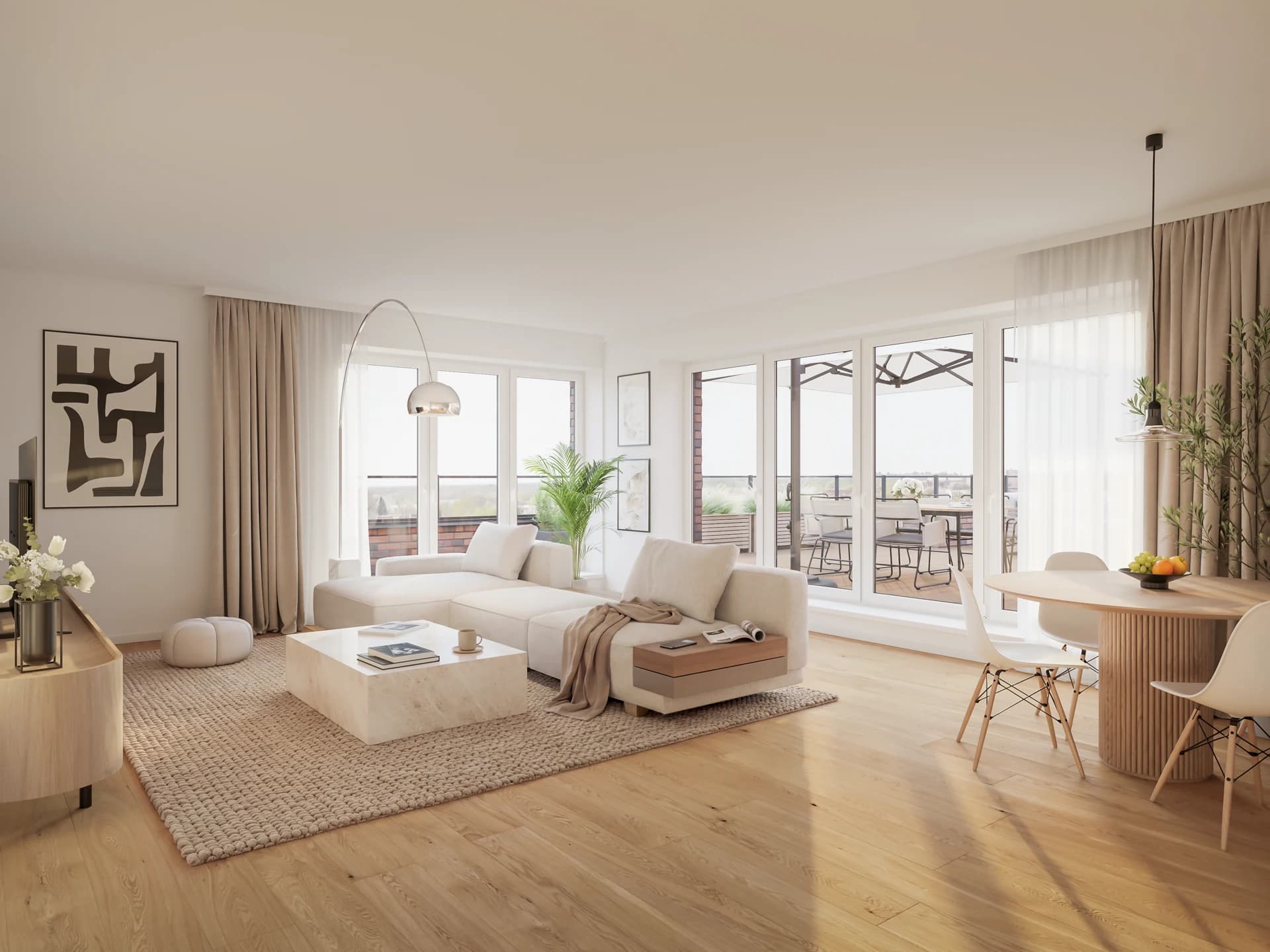
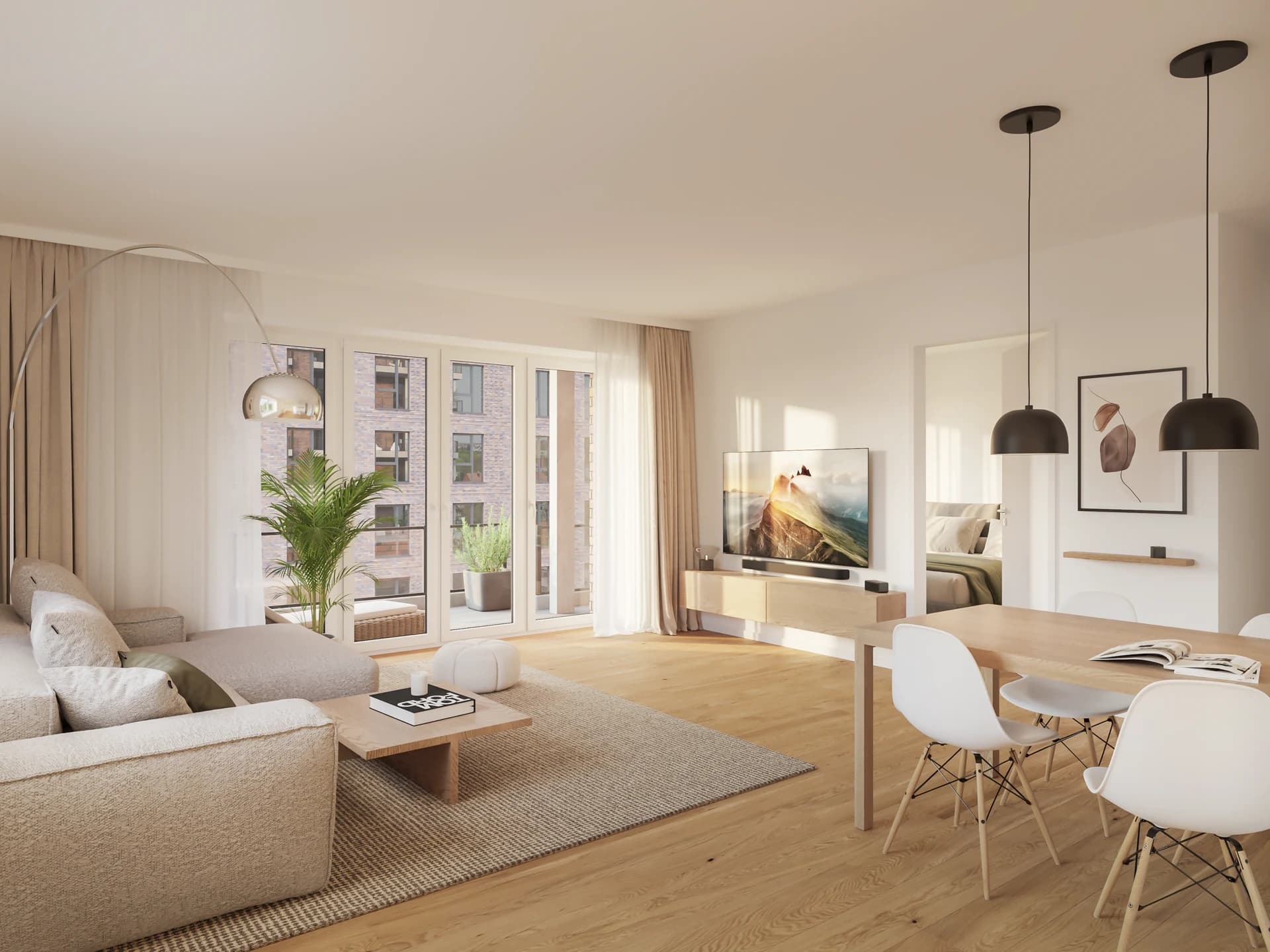
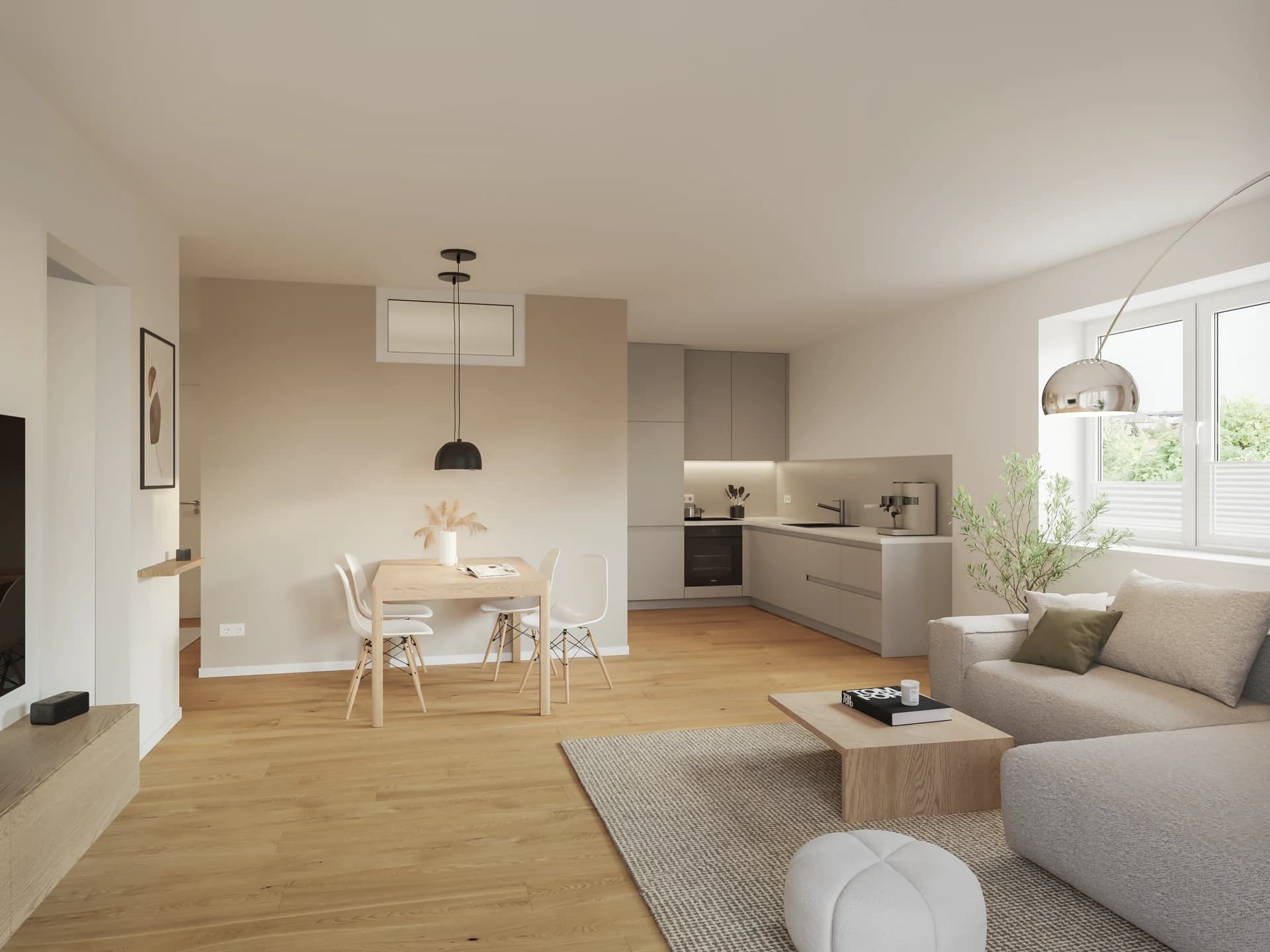
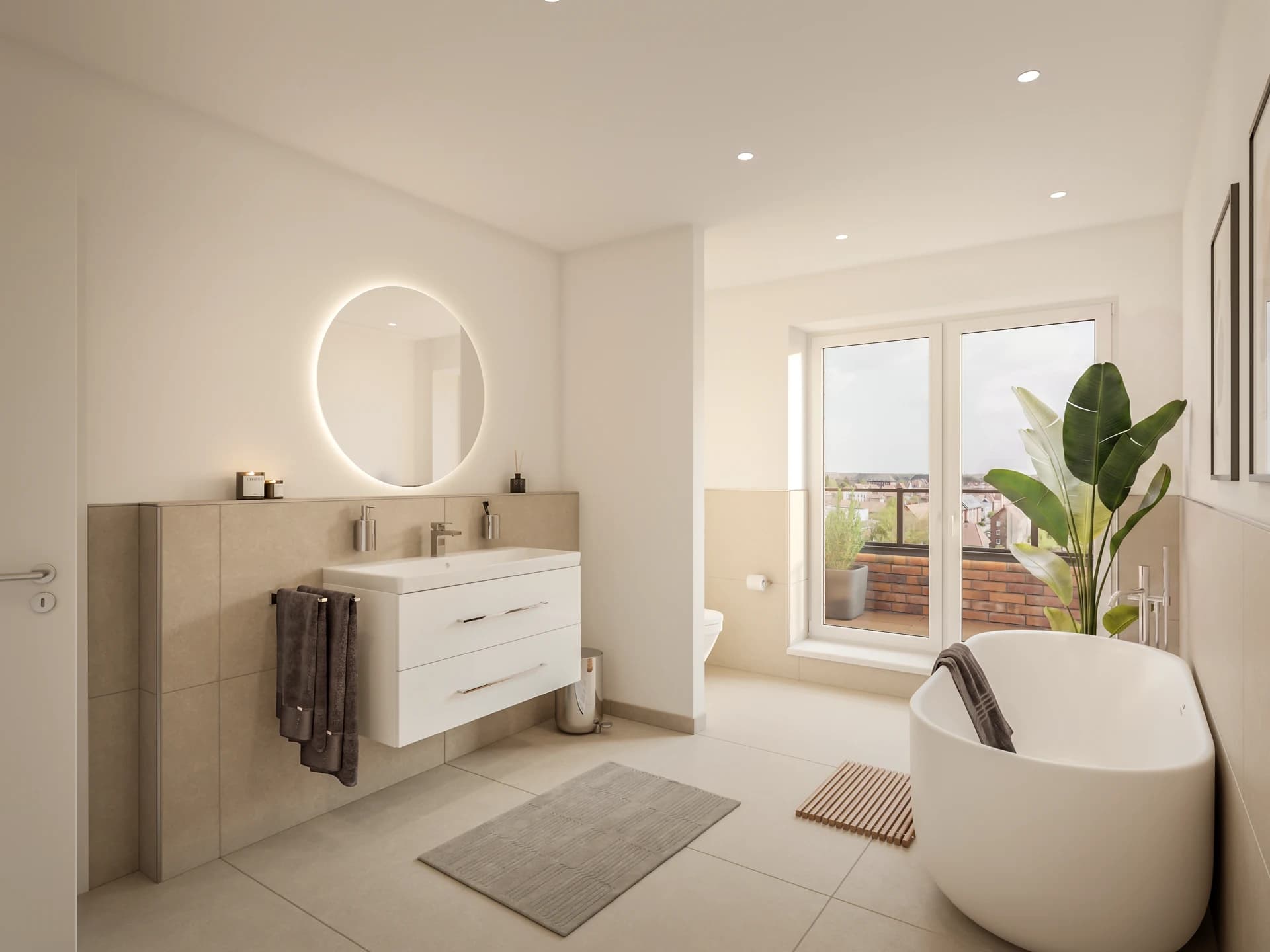
What an interior visualization should do
A good interior visualization doesn't just illustrate the floor plan; it makes the space tangible. Material choice, daylight, furnishing, and level of detail decide whether an image makes the space intelligible — or merely decorates.
Renderings are produced in 3ds Max and V-Ray and finished in Photoshop. Output resolutions cover web, brochure, and large-format print.
Where interior visualizations are used
Marketing for new-build apartments
Living rooms, kitchens, bathrooms, and bedrooms as renderings for exposés, listing portals, and websites. Before the apartment is built, prospective buyers see what it will look like.
Renovation and remodeling
Show existing rooms in their planned state — for client presentations, cost approval, or planning alignment.
Material and furnishing variants
Variants of materials or furnishings on the same view help make decisions early and confidently — before real delivery or construction.
Showrooms, practices, and commercial spaces
Offices, medical practices, restaurants, or retail spaces as visualizations for concept presentations, investor pitches, and approval processes.
How an image is made
Four steps, around two to three weeks from full data handover.
- 01
Briefing
You send the plan set (site plan, floor plans, elevations, sections) and references. We agree on scope and visual direction.
- 02
Clay renderings
First untextured drafts establish perspective, proportion, and light. Here we decide which views are taken further.
- 03
Material development
Based on the chosen perspectives, color drafts emerge with materials, vegetation, and atmosphere. One feedback round is included.
- 04
Final
After the last sign-off, the images are final-rendered and delivered in the agreed resolution.
Who you'll work with
This studio is run by me, Philipp Poschmann. I hold a B.A. in Architecture and have been working in architectural visualization for eight years — both employed at small studios and independently. The architectural background helps me read plans correctly, reconstruct views true to the design, and speak the same language as architecture firms, developers, and agents.
Tools: 3ds Max, V-Ray, and Photoshop. Delivery in German and English, based in Lübeck.